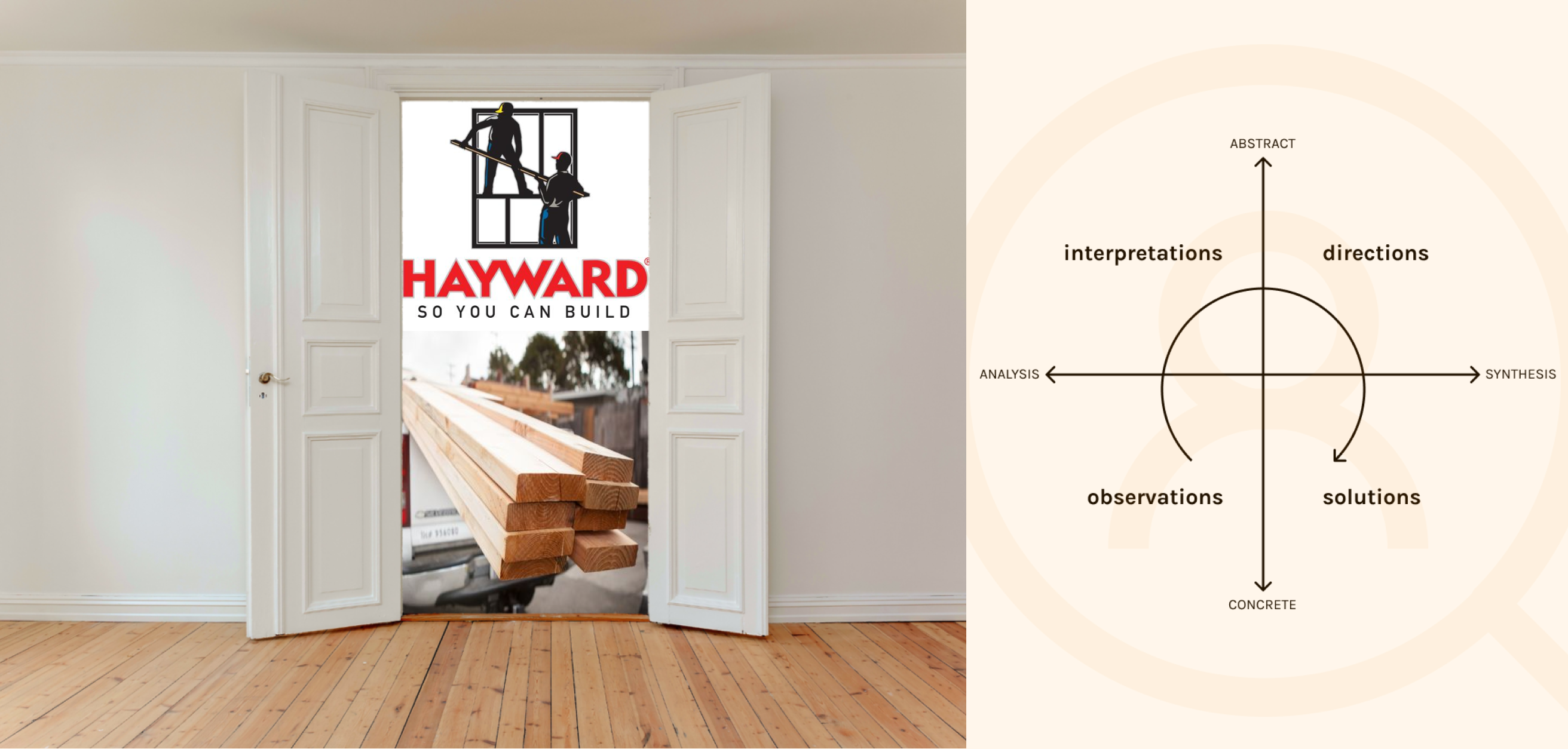
A needfinding study to uncover behaviors, pain points, and unmet needs in construction material procurement.
Inspo
Understanding real user workflows and decision friction to inform future product opportunities.
Skills
Qualitative Research Insight Synthesis Problem Framing Opportunity Identification
Tools
Field Interviews Contextual Observation Affinity Mapping Insight Workshops
Construction material procurement is a complex, constraint-driven process involving multiple stakeholders, physical and digital touchpoints, and tight cost and time pressures. To understand where users struggle — and where opportunity exists — I conducted a needfinding study with Hayward Lumber customers and associates, focusing on real behavior rather than stated preferences.
Through contextual interviews and observation, I identified recurring patterns, workarounds, and moments of friction within existing workflows. Rather than jumping to solutions, I synthesized these findings into core tensions — places where user goals, constraints, and information needs misalign — revealing opportunities for improved decision support, communication, and system design.
The outcome of this work is a set of validated insights and opportunity areas that can inform next-phase concept development and product strategy.
No items found.
Research Approach
To uncover unmet needs and decision friction in construction materials workflows, I conducted contextual observation and semi-structured interviews with Hayward Lumber customers and associates. These methods helped surface actual behavior — not just what people say they do — and revealed patterns and workarounds that wouldn’t emerge through surveys alone.
I chose these methods to capture real context and constraints — essential for identifying opportunities that could meaningfully improve user experience and business value.
No items found.
Key Observations
We conducted interviews and field observations with door professionals across sellers and distributors to understand how they experience their work and how others perceive it.
Across conversations, a consistent pattern emerged: door professionals repeatedly emphasized that their work is “much more complicated than it seems” and that “doors are more than just a rectangle.”
This recurring defensiveness signaled a deeper issue — a perception that the door industry is often underestimated or overlooked, even by those entering it.
No items found.
Interpretations
Observing this defensiveness across multiple professionals led us to ask why veterans of a complex industry felt the need to prove its value to outsiders.
This led to a central insight: Door professionals defend the door industry to make people care about it.
By emphasizing complexity, they disrupt people’s desensitization toward doors — helping customers recognize both the impact of doors on homes and the value of the professionals behind them.
This behavior serves not only a sales function, but also a social one: helping door professionals feel seen, valued, and less overlooked.
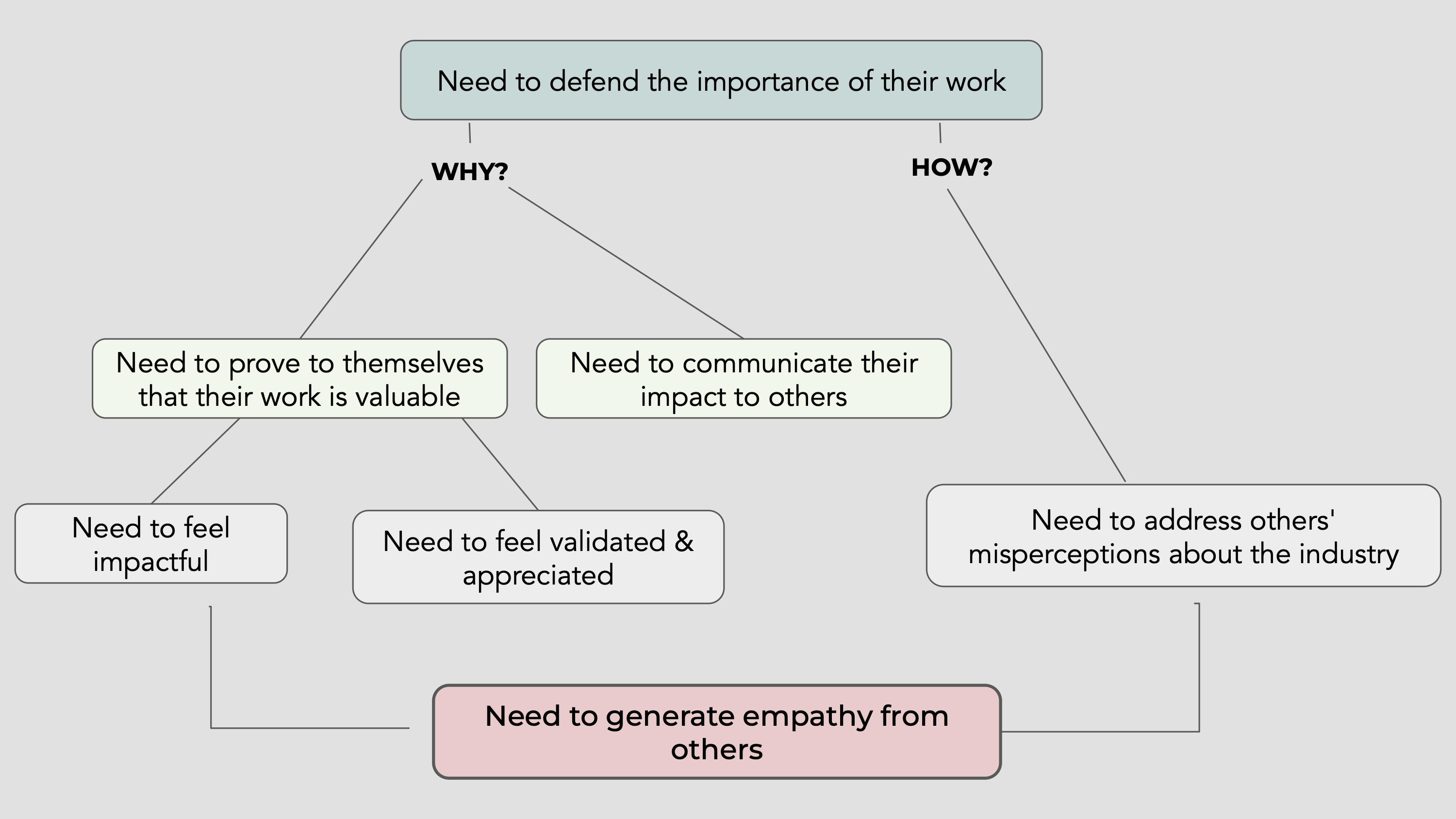
This insight revealed three core needs shaping door professionals’ behavior:
A need to validate the value and expertise of their work
A need to communicate the impact doors have on homes and the building process
A need to address misconceptions about the simplicity of the industry
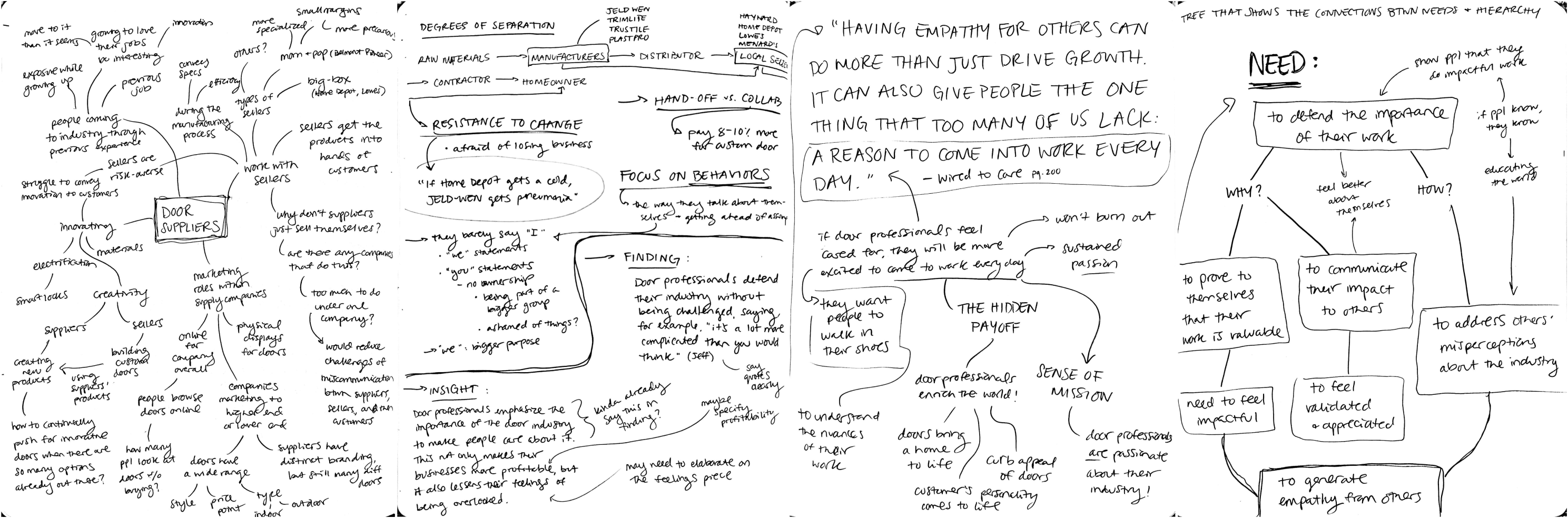
Below is a further breakdown of these needs:
No items found.
Directions & Concept Explorations
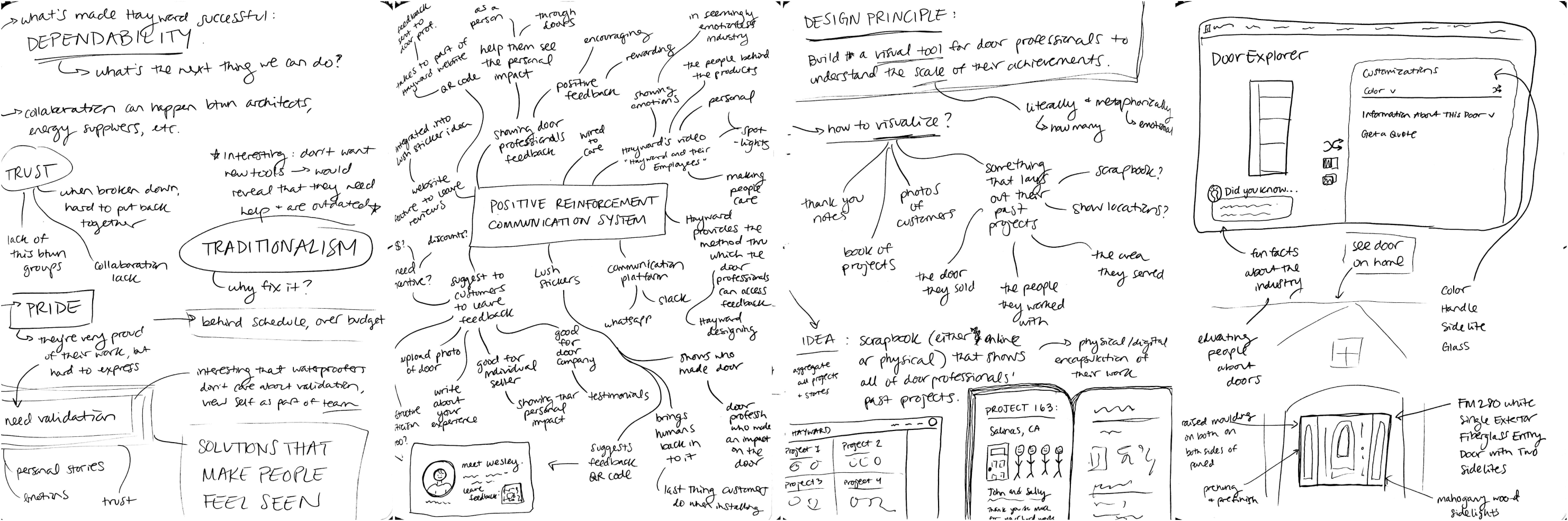
To respond to these needs, we defined a set of design principles to guide concept exploration. These principles shaped early solution ideas intended to test how door professionals might feel more recognized, supported, and empowered in their work.
Principle 1:
Build tools that make door professionals’ impact visible and tangible.
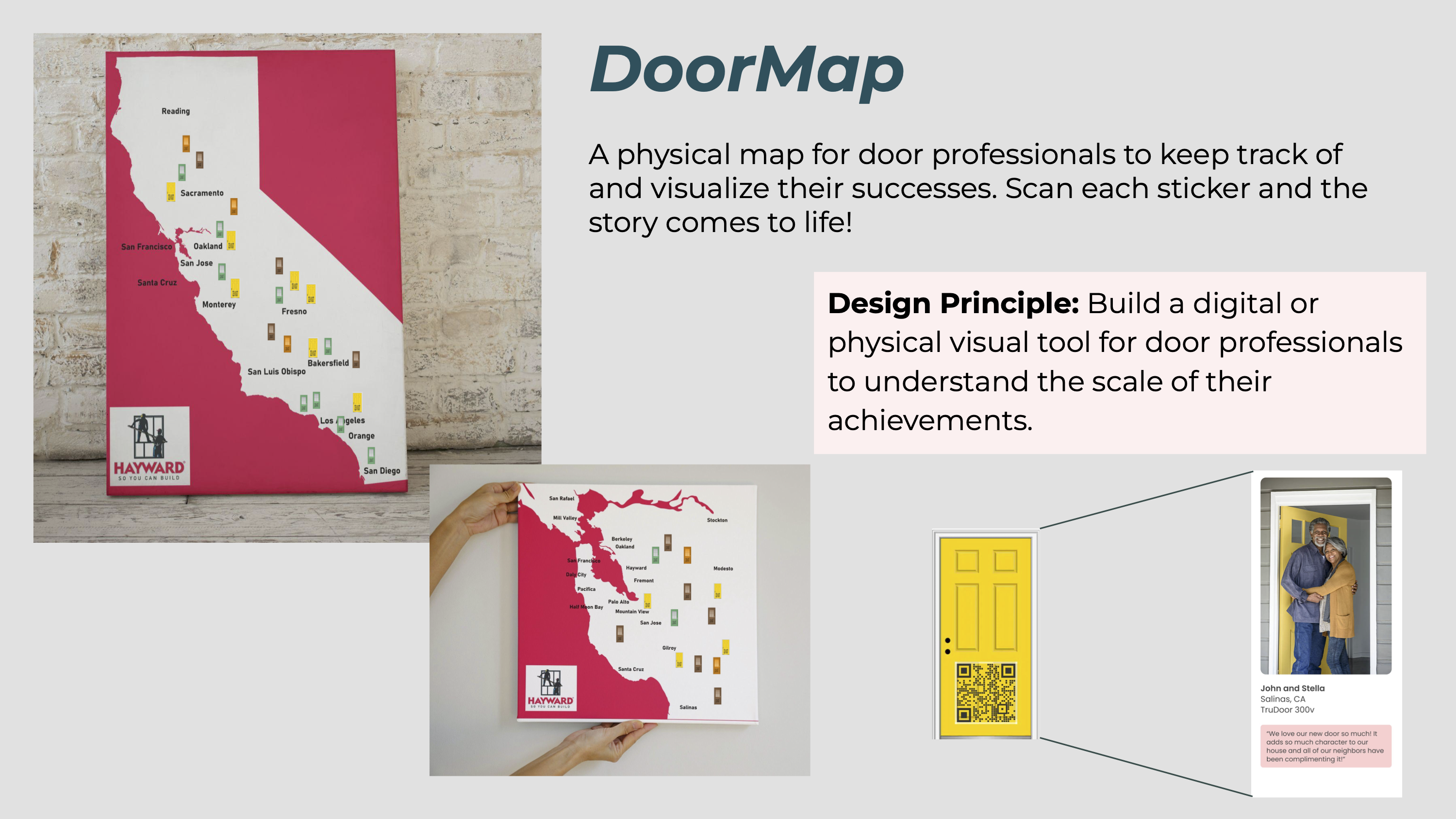
Solution: DoorMap
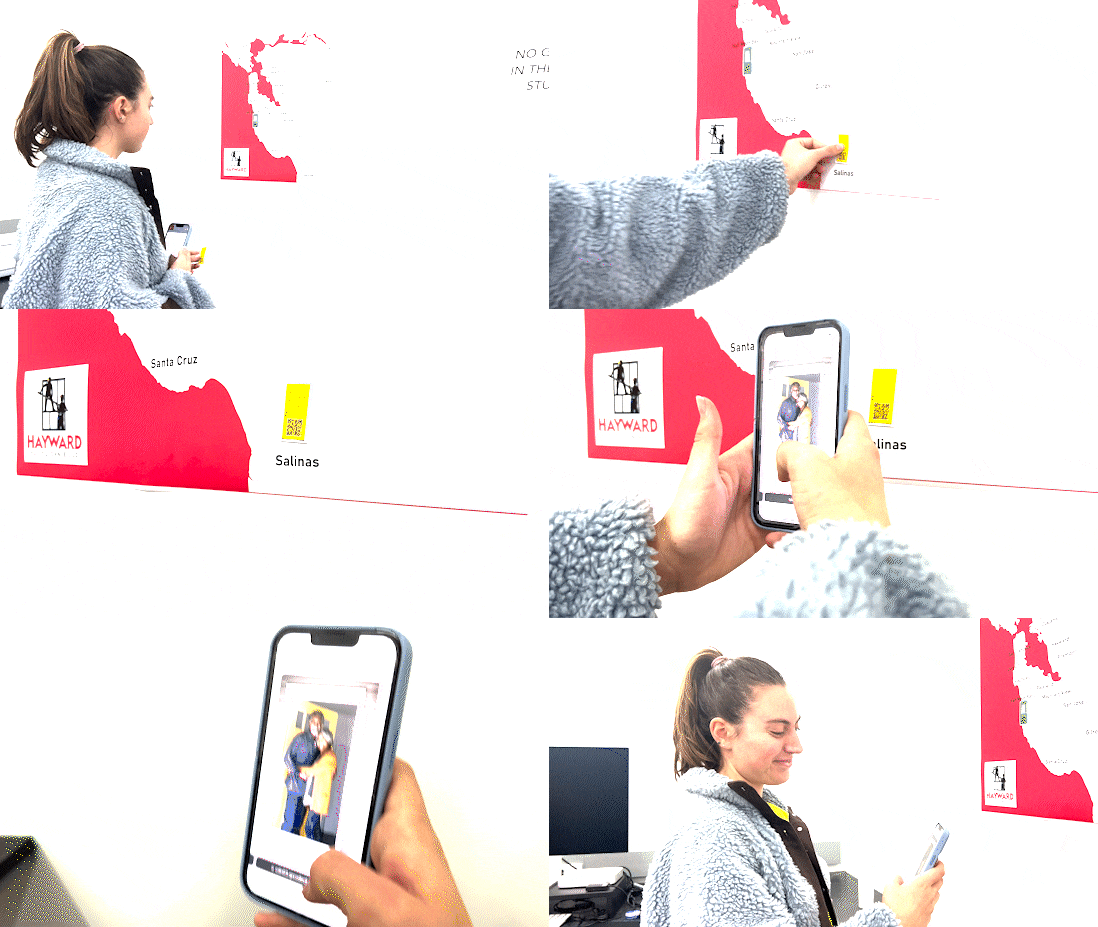
DoorMap explores how physical visualization could help door professionals see the cumulative impact of their work over time. By marking completed projects on a map, the concept turns abstract success into something concrete and visible within the workplace.
Principle 2:
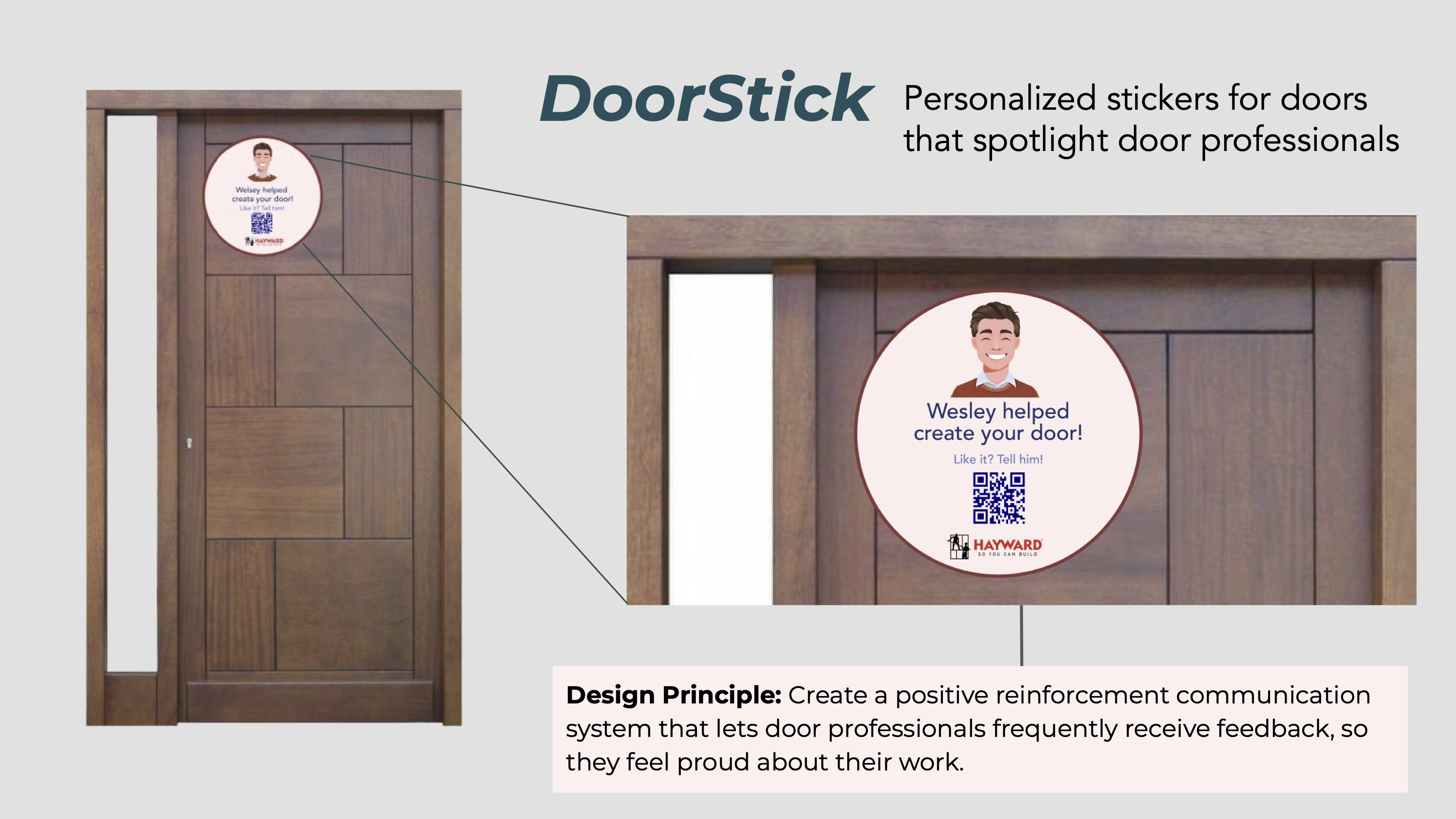
Create a positive reinforcement system that helps door professionals feel recognized for their work.
Solution: DoorStick
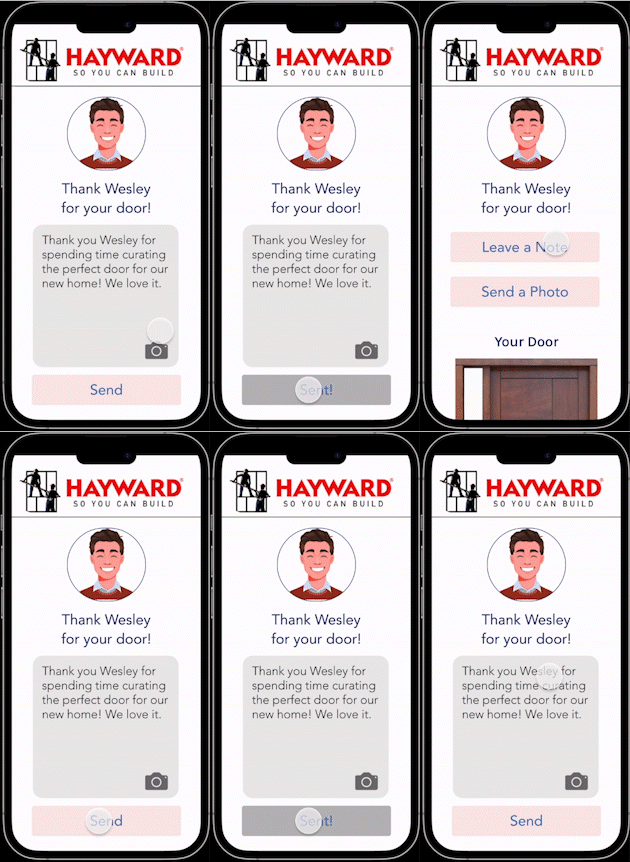
DoorStick explores how lightweight feedback mechanisms could make appreciation more visible and accessible for door professionals. By placing a simple sticker on a completed door, the concept creates a direct touchpoint between customer and professional — lowering the barrier for acknowledgment and reinforcing the human contribution behind each installation.
Rather than focusing on transactional outcomes, DoorStick tests how small moments of recognition might influence pride, motivation, and perceived value of work over time.
Principle 3:
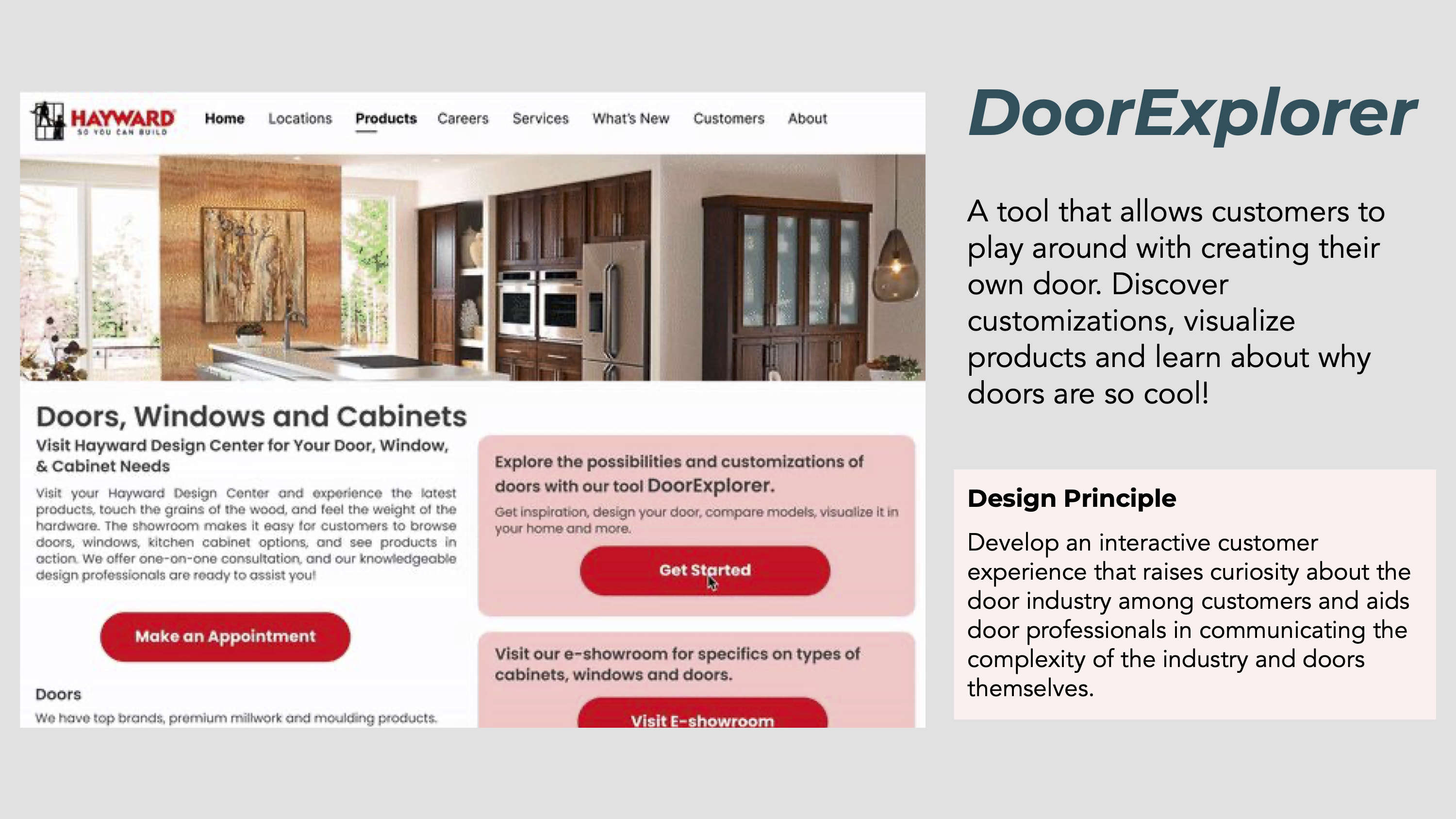
Increase customer curiosity and understanding of the door industry to support more meaningful conversations.
Solution: DoorExplorer
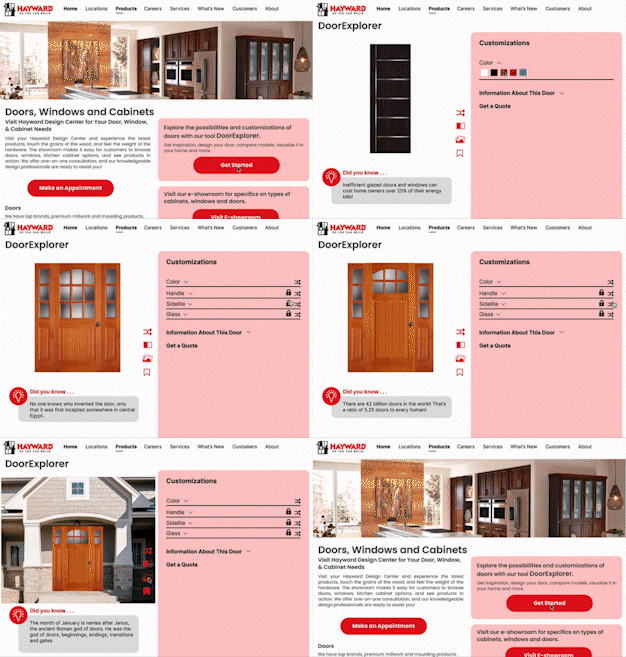
DoorExplorer explores how interactive experiences could help customers better understand the complexity and customization involved in doors. Through playful exploration and comparison, the concept allows users to visualize options, discover tradeoffs, and engage more deeply with the design process.
By making industry knowledge more accessible, DoorExplorer supports door professionals in communicating expertise while helping customers move from passive selection to informed decision-making.
No items found.
Learnings
This project strengthened my ability to navigate ambiguity, synthesize abstract information, and move from observation to insight with intention.
Working deeply within an unfamiliar industry sharpened my ability to build empathy quickly and identify patterns beneath surface-level behaviors.
The needfinding methods and storytelling practices developed through this work give me confidence approaching new problem spaces with structure, curiosity, and strategic focus.


.gif)