Sandia

In short

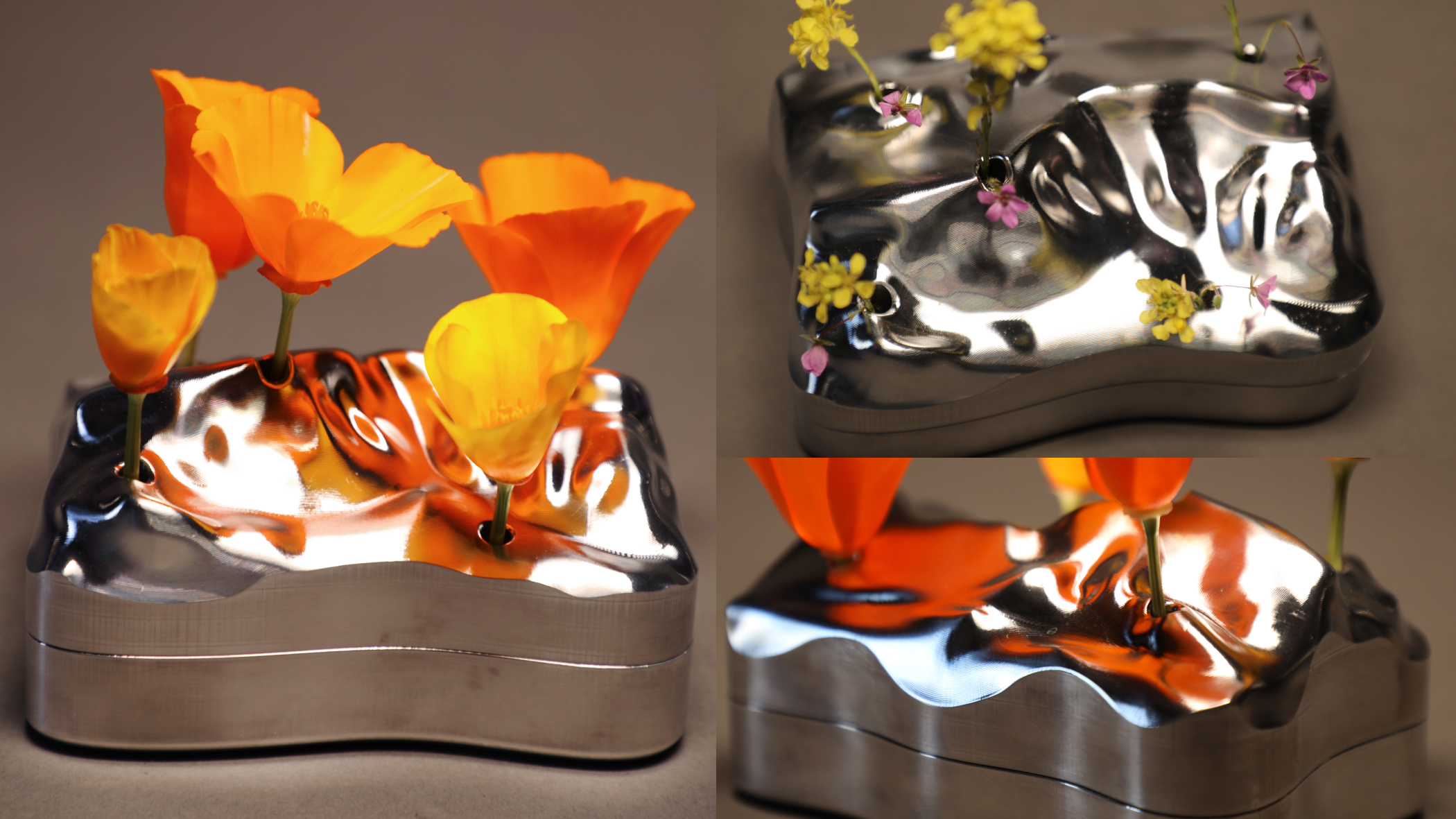
An aluminum vase exploring form, reflection, and light.

Inspo

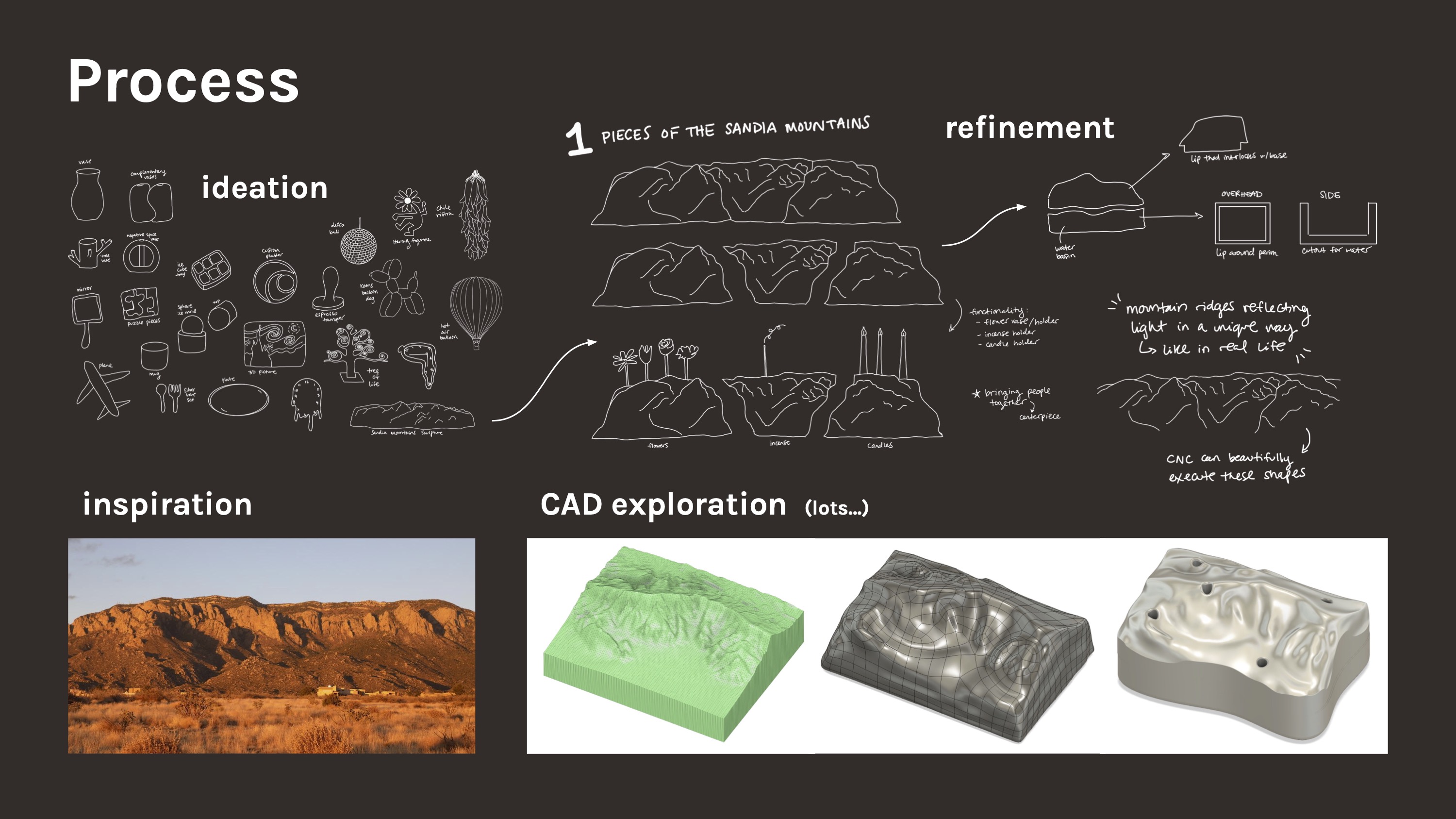
The Sandia Mountains of New Mexico and how they reflect light at sunset.

Skills

CAD Surface Modeling
Design for Manufacturability
Physical Prototyping

Tools

CNC Mill
Solidworks
CAM Toolpaths
Hand Finishing

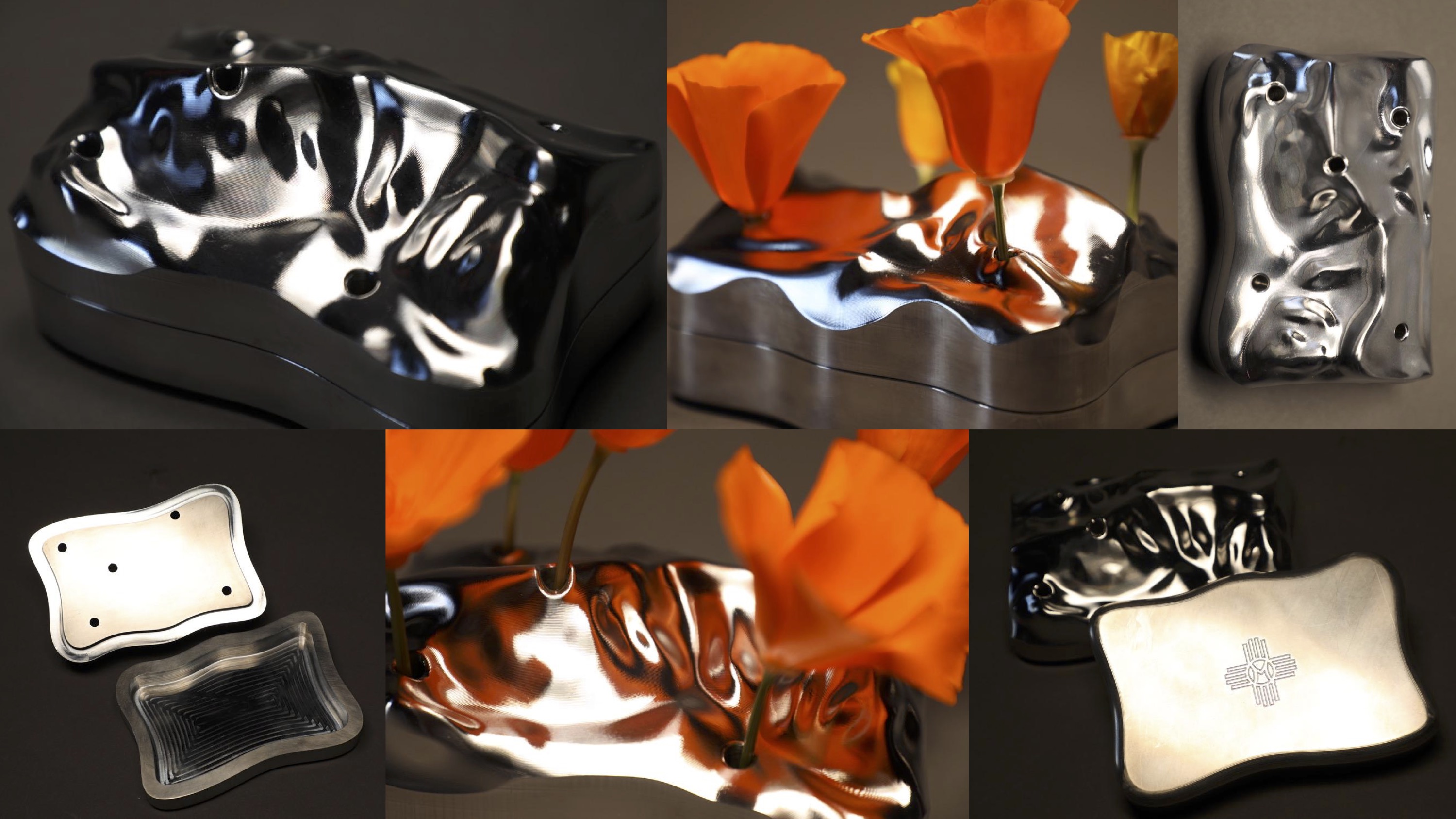
Sandia is a CNC-machined aluminum vase inspired by the mountains of my hometown – Albuquerque, New Mexico. The Sandia Mountains are known for the way they glow pink and orange at sunset as they reflect light, which became the central design driver for this piece.

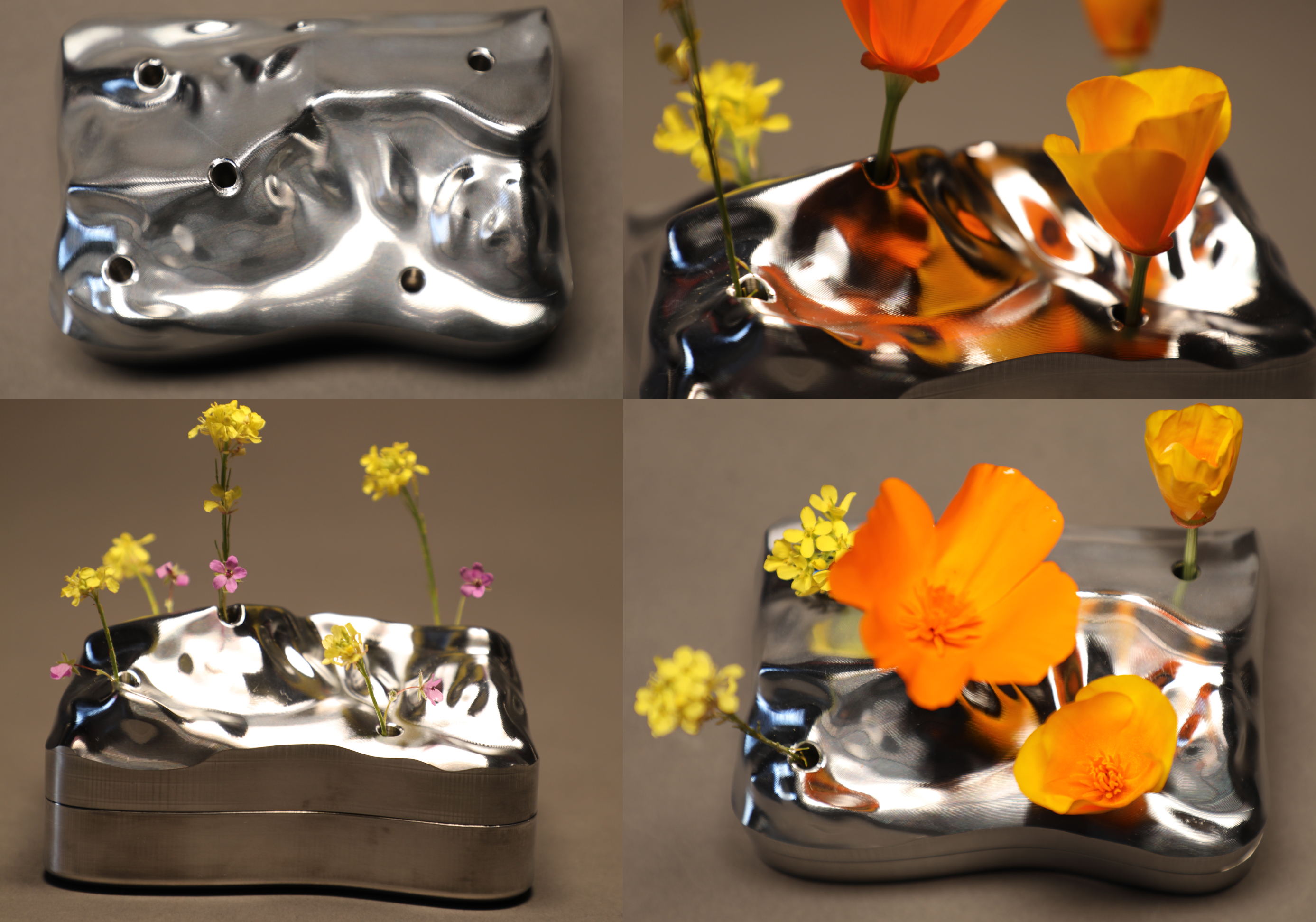
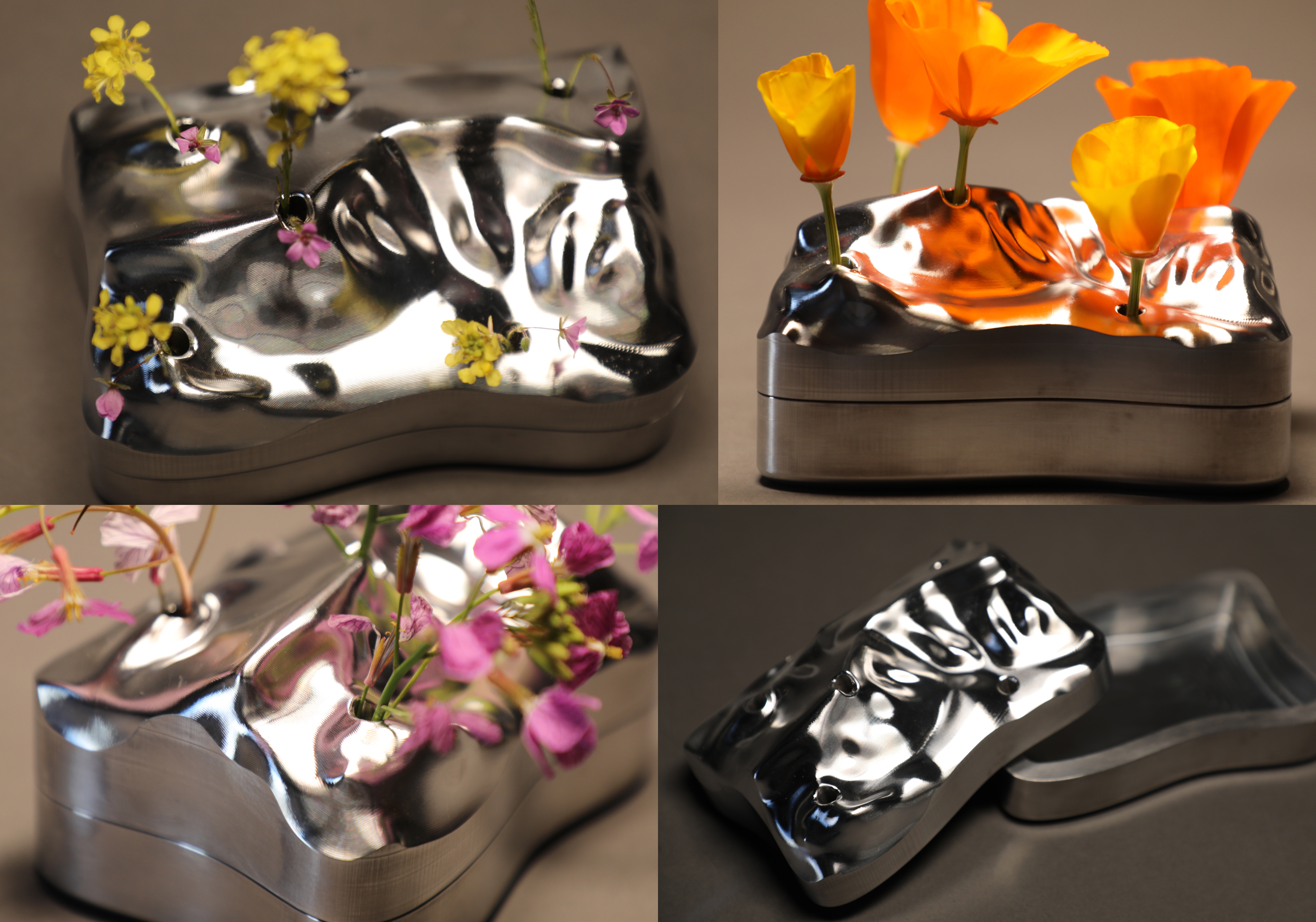
I chose to design a vase as a way to integrate nature into the sculpture itself. The rigid, reflective aluminum form acts as a landscape, while the flowers introduce softness, color, and organic variation.

Design Intent

I set out to design an object that captures the way light moves across natural landscapes. Drawing inspiration from the mountains, I focused on topography, smooth transitions, and continuous curvature to create a surface that visually shifts with different light sources.

Beyond form, I wanted to push the CNC’s ability to machine organic geometry while maintaining precision and intentional surface quality.

Through sketching, early modeling, and lots of CAD manipulation, I iterated on the balance between steep and shallow surfaces to create visual rhythm while preserving machinability.

CAD & Toolpath Strategy

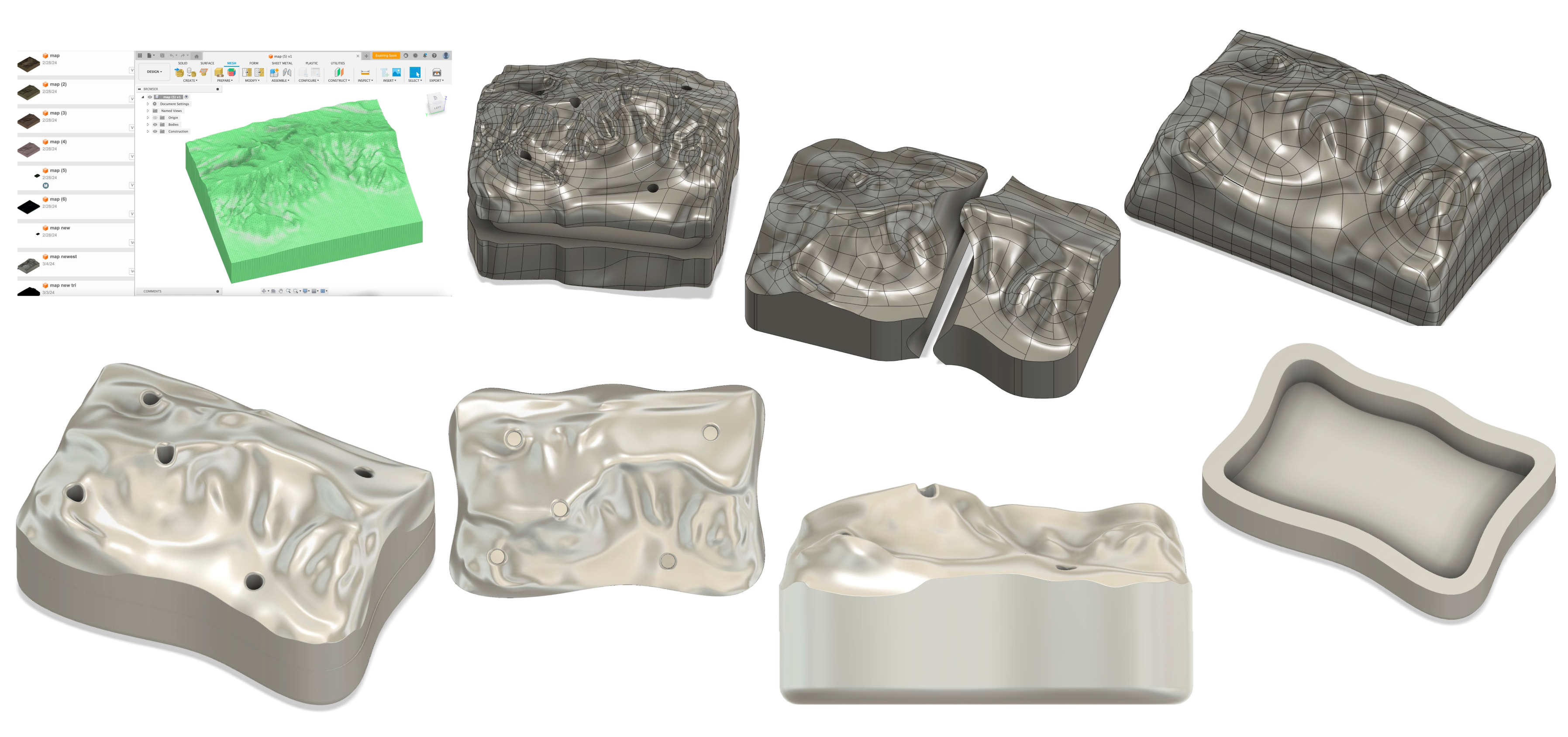
I designed the final geometry through surface modeling, using lofts, guide curves, and controlled blending to transform an exact topographic map into a continuous, machinable form. I softened transitions between peaks and valleys to preserve curvature flow and prevent faceting.

I planned toolpaths to support surface quality, prioritizing consistent stepovers, gentle entry and exit moves, and clean engagement throughout machining.

CNC Process

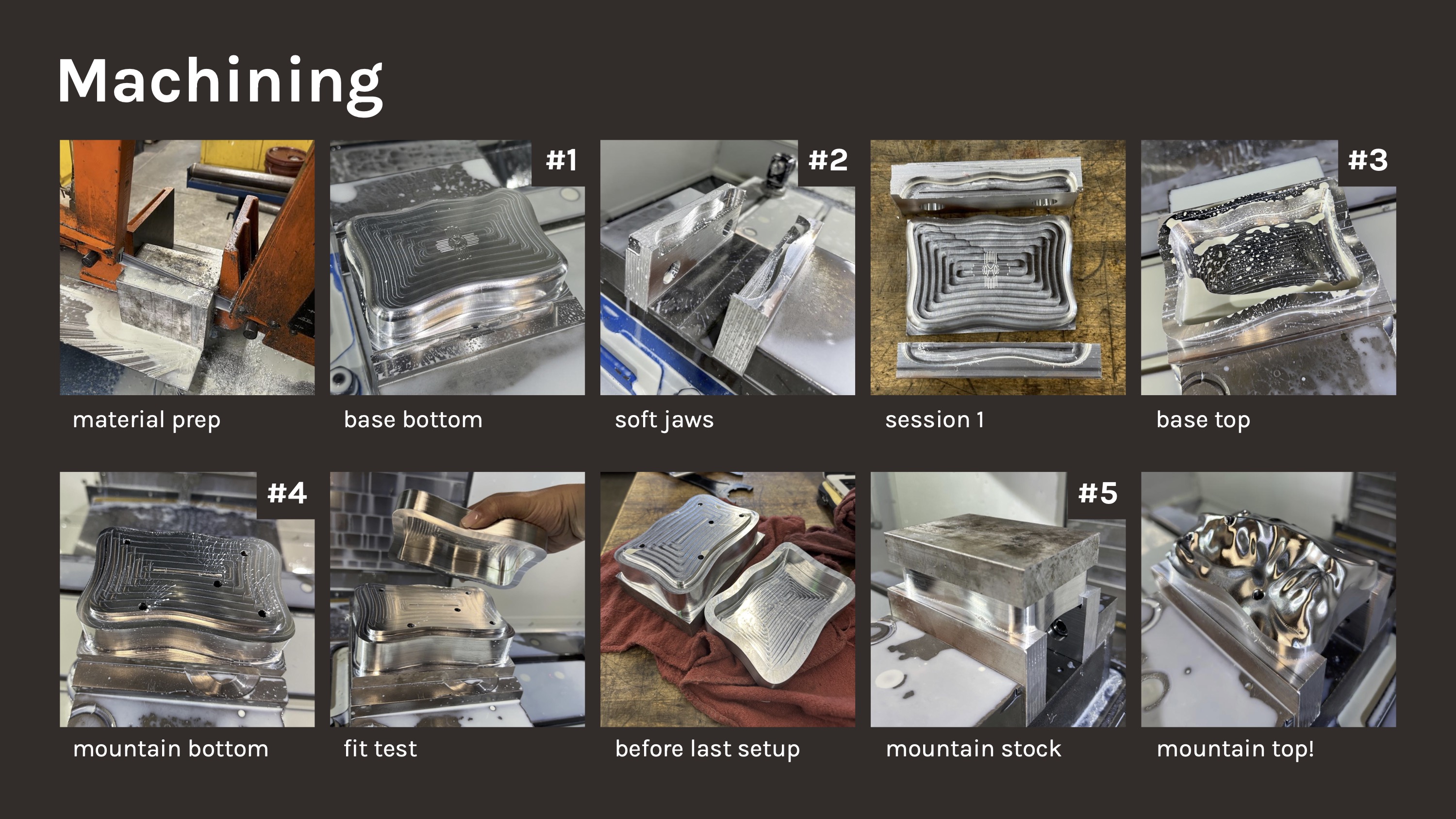
I machined Sandia across 5 CNC setups, beginning with material preparation and progressing through separate operations for the base and sculpted top.

I used custom soft jaws, fit tests, and intermediate setups to ensure alignment between parts and maintain precision across CNC sessions.

Surface Finish

Surface finish was a critical component of the design. For the mountain top, I used a small stepover to create a smooth machine finish. On the base and vertical walls of the piece, I hand sanded and polished to enhance reflectivity and soften transitions.

The final surface responds dramatically to light, with highlights and shadows shifting across the form depending on viewing angle and environment.

Assembly & Interface

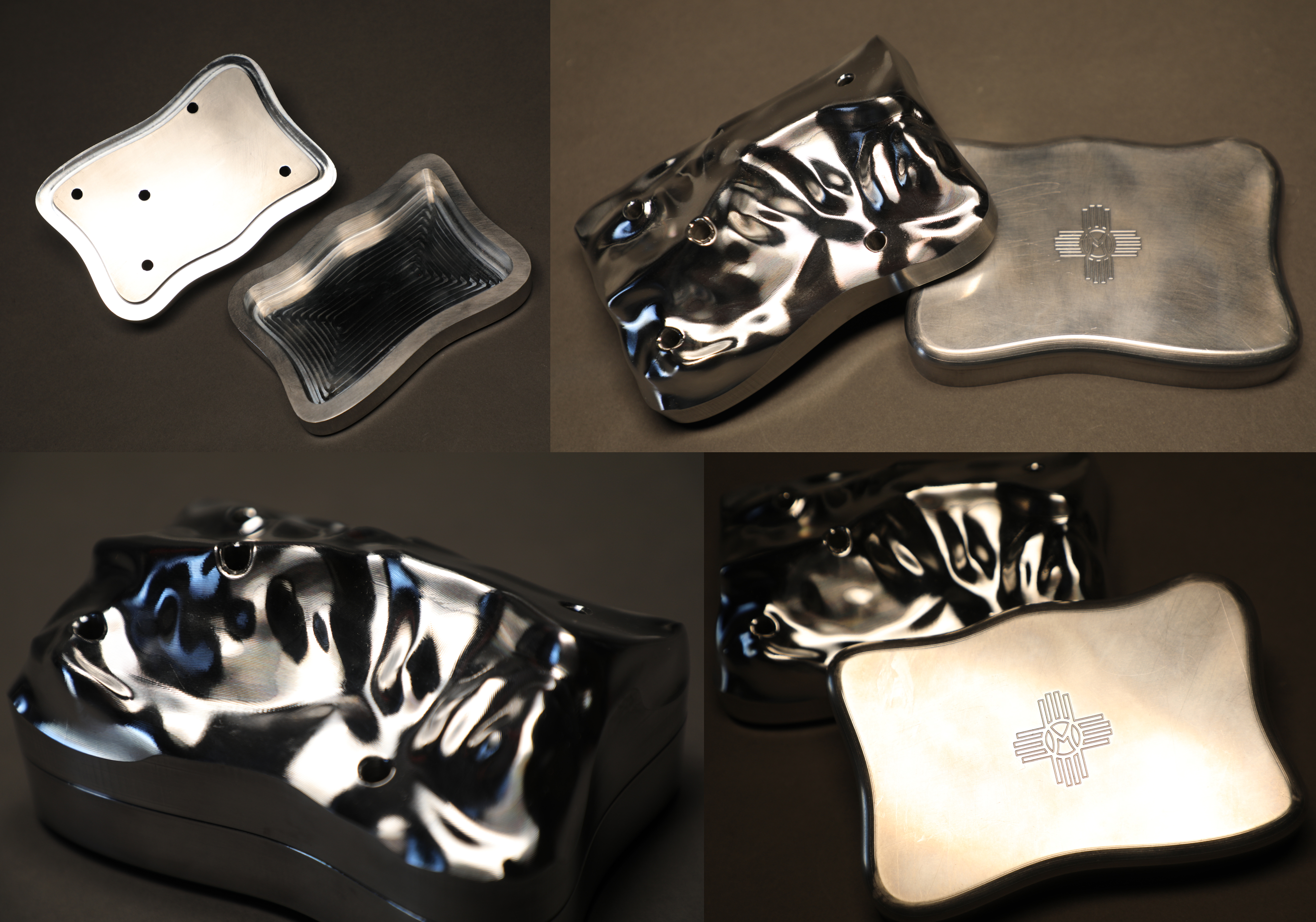
The vase consists of two interfacing components: a sculpted top and a water-holding base. The top nests precisely into the base, balancing visual lightness with structural stability.

Designing this interface required careful consideration of tolerances, alignment, and the visual break between parts.

I engraved my signature on the underside of the base in the form of a Zia — the New Mexico state symbol — grounding the piece in place, memory, and personal history.

back to

all from

Designer